Converting Photo Reference into Abstract Shape Studies
Why reduce photos to shapes
Photos contain abundant information; for many design problems that excess detail is distracting. Reducing a photograph to simplified shapes clarifies the underlying structure: how masses relate, where the strongest contrasts lie, and which edges define the composition. These shape studies are efficient exercises for both composition and value control.
Step 1: Choose a single photographic idea
Pick a photo with a clear subject and background separation. Avoid extremely busy images for a first pass. The goal is not to copy the photo exactly but to extract the spatial relationships you want to study.
Step 2: Create a silhouette
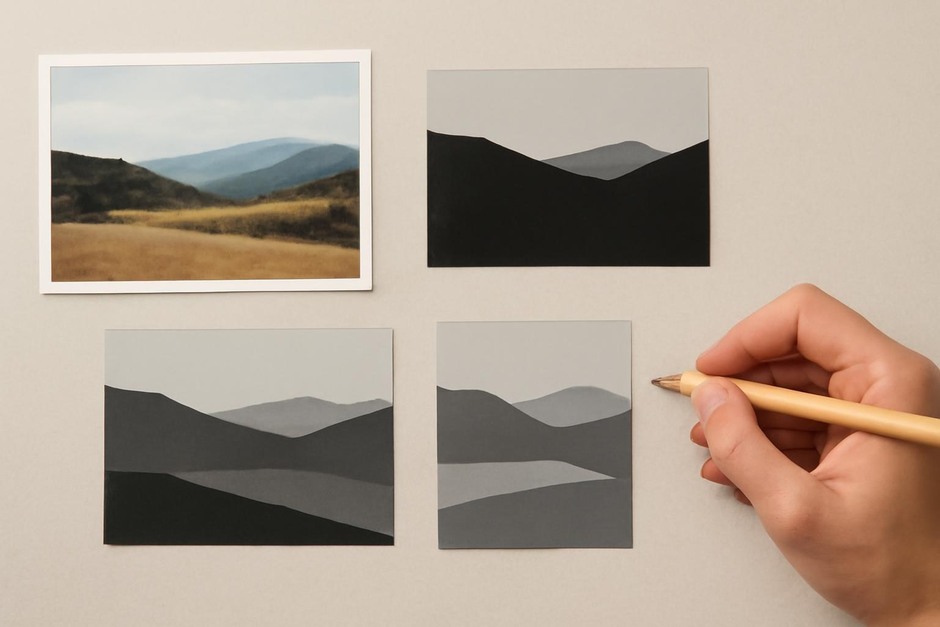
Start by blocking in the main masses—the subject, foreground, and any strong negative spaces. Use a single flat colour and focus on the silhouette’s readability at a small size. If the silhouette reads clearly at thumbnail scale, the composition works from a distance.
Step 3: Map primary values
Add 2–3 values beyond the silhouette: a lighter value for key highlights, a mid value for plane changes, and a dark for deep shadow. These three values often suffice to test whether the photo’s light pattern supports the composition you want.
Step 4: Abstract shapes for rhythm
Look for repeating shapes or rhythms in the photo: arches, diagonals, rounded forms. Simplify them into flat shapes that interact rhythmically across the canvas. This is a design decision: preserve rhythms that serve the idea and discard those that compete.
Practical visual examples
Example A: Portrait in soft light. Silhouette the head and shoulders, then place a mid value for the cheek plane and a darker value for the hair mass. A single bright highlight may be enough to indicate the light source and focal point.
Example B: Urban scene. Block in building masses and the street void as silhouettes, then use two mid values to indicate plane shifts and a dark for deep shadowed alleys. Remove incidental signage or textures that distract.
Tolerable compromises
Abstraction requires letting go of certain details. For instance, small textures or precise facial features are often removed. This is intentional: shape studies aim to identify what must be preserved to keep the idea legible, and what can be invented later.
Using shape studies in iterative workflows
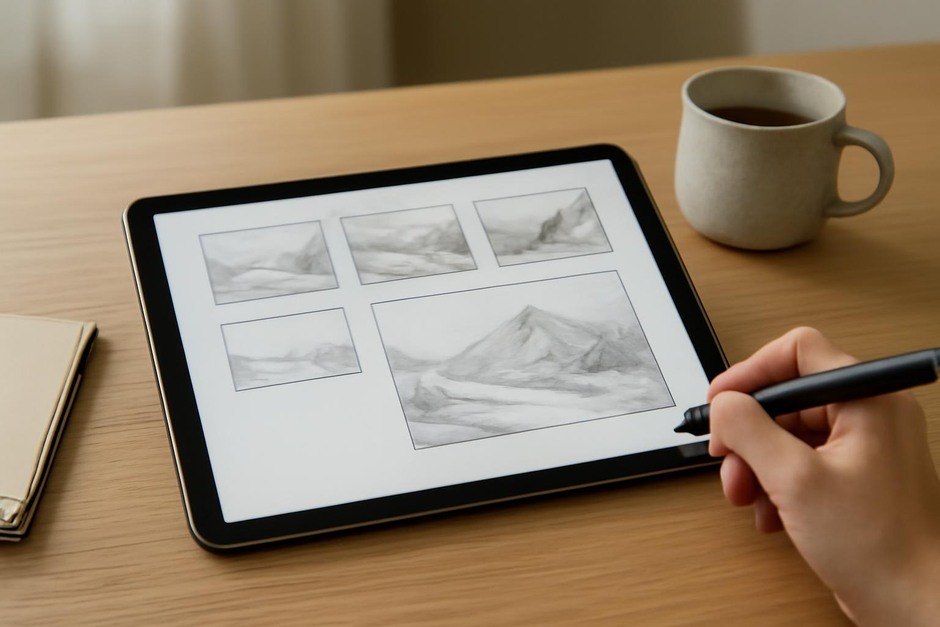
- Start with 3–5 thumbnails using different silhouette decisions derived from the same photo.
- Choose the strongest thumbnail and develop a 3-value study.
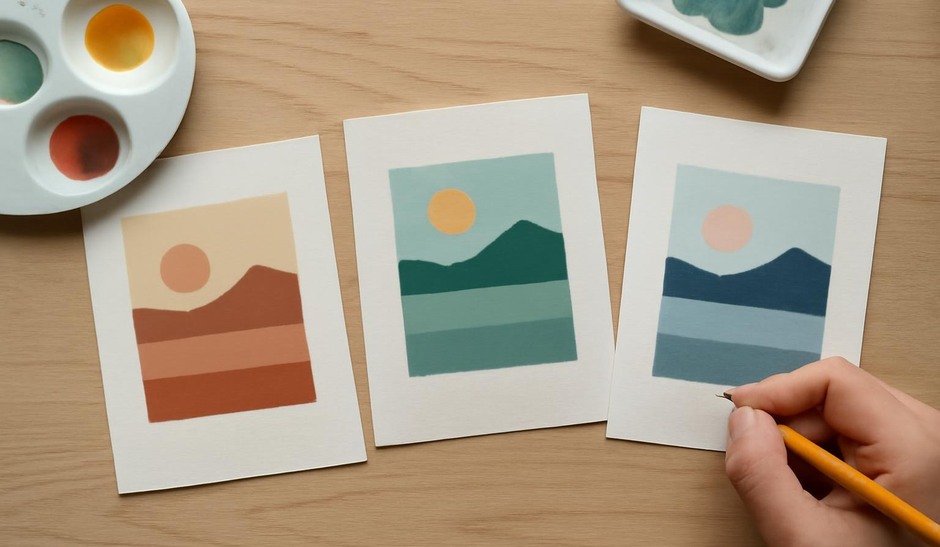
- Iterate two colour passes that respect the shapes and values, then proceed to a focused refinement pass if desired.
Reducing photos to shapes is a discipline that trains visual prioritization. Regularly practicing this reduction helps you make faster, clearer decisions in later stages of illustration, from composition to colour choices.